Travel Tips
Sitting with your child is not a seat upgrade
What the government's crackdown on "rip-off" flight fees really means for your next trip, from someone who spent 20 years on the other side of the galley curtain.
Anna Roffey · 2 October 2026
What the government's crackdown on "rip-off" flight fees really means for your next trip, from someone who spent 20 years on the other side of the galley curtain.
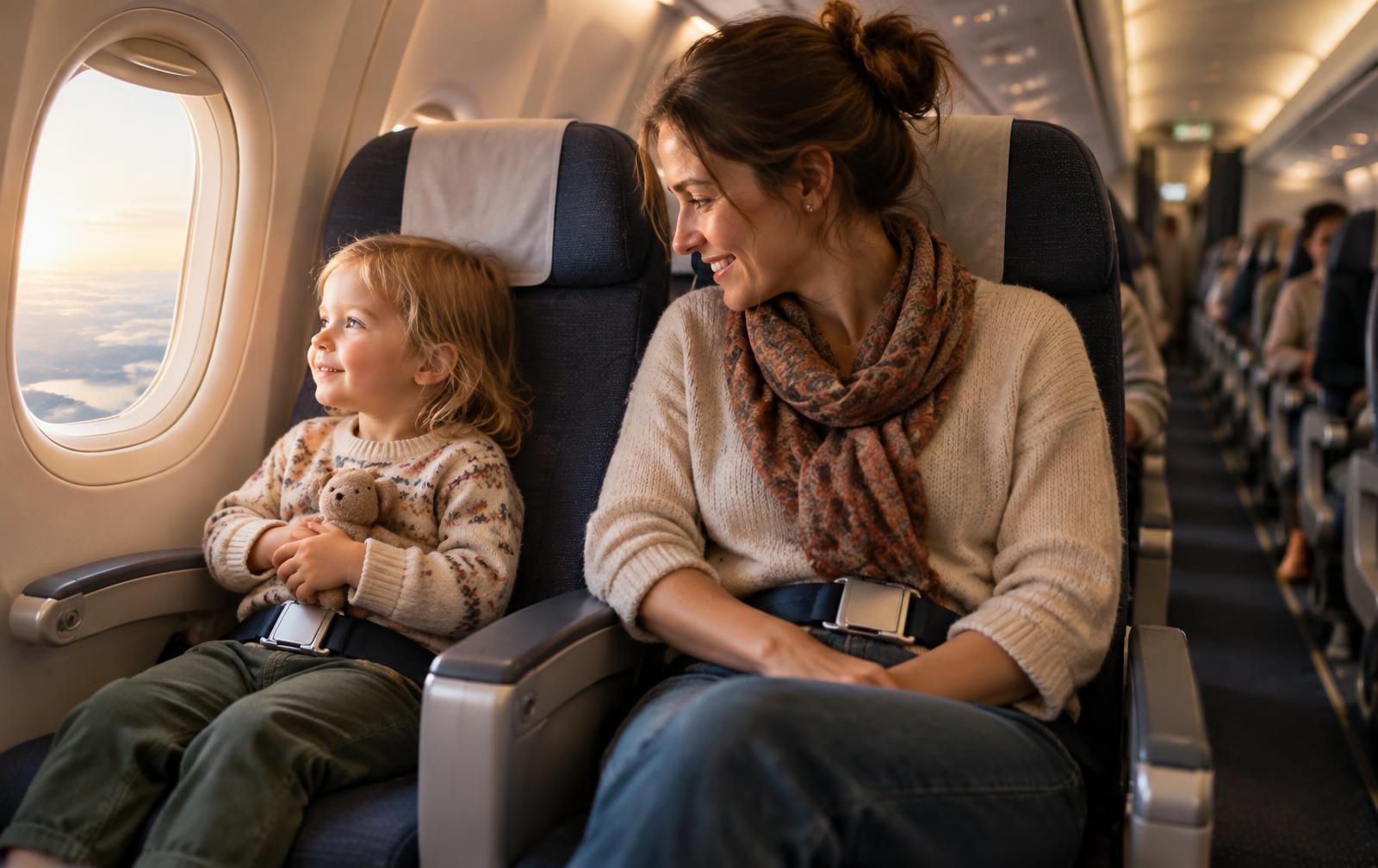
Picture the scene. Boarding is nearly finished, the doors are about to close, and a mum is standing in the aisle at row 31. Her four-year-old is sitting in 14B, next to a stranger.
Anyone who has worked as cabin crew knows that moment. You walk the aisle, smile, and start negotiating seat swaps with passengers who paid for their spot and would quite like to keep it.
For years, an airline's answer to that mum at the booking stage was simple: pay up. That is about to change.
What has been announced
On 2 October 2026, Prime Minister Andy Burnham and Transport Secretary Heidi Alexander set out three changes for anyone flying with an airline operating in the UK.
- Free family seating. Children under 14 must be seated with a parent or accompanying adult at no extra charge. Today, sitting together can cost a parent and child up to £104 on a return trip.
- Free fixes for simple name errors. Correcting a minor spelling mistake on a booking will no longer carry an admin fee. Those fees currently reach as much as £40.
- A crackdown on disruptive passengers. The government is working with airlines and trade unions on a system for sharing information about persistently disruptive passengers. Airlines logged more than 1,000 serious incidents in 2025, and each airline will be able to decide whether to ban repeat offenders.
The consumer group Which?, which has campaigned against these fees for a decade, has welcomed the move.
The small print (my barrister brain cannot help itself)
Before you rebook anything, here is what the headlines leave out.
- It is not law yet. The changes arrive once the Civil Aviation Bill receives Royal Assent. Ministers are aiming for next summer's holidays. If you are booking flights for February half-term or Easter, today's rules may still apply.
- "Accompanying adult" matters. The rule is not limited to parents. Grandparents taking the grandchildren away, or an aunt travelling with a niece, should be covered too. That is real news for empty nesters planning a multi-generation trip.
- "Simple" is doing a lot of work. Expect it to cover a misspelt surname or a transposed letter, not handing your ticket to a different person. The detailed rules have not been published yet.
- Bags and other extras are untouched. Hold luggage, adult seat selection and the rest of the add-on menu are not part of this.
- Many airlines already do this. Most UK carriers already protect families. The point is consistency across every airline. Ryanair changed its family seating policy earlier this year after an investigation, and the new rules bring the UK closer to the EU's approach.
Why the disruptive passenger part matters more than you think
This is the bit most coverage skims over, and it is the bit I care about most.
One disruptive passenger can turn a calm flight into a diversion. That means hundreds of people missing transfers, first nights and dinner reservations, and crew dealing with something no one should face at work. A shared system that helps airlines spot repeat offenders before they board is good for every traveller. A calm cabin is part of what you pay for.
What I would do now
- Book everyone on one reservation. Separate bookings are the most common reason families end up split, because the airline's system cannot see you are travelling together.
- Copy names from the passport, not from memory. The name on the ticket must match the passport exactly. Until the new rules land, a typo can still cost you.
- Check the airline's family policy before paying for seats. Many already seat young children with an adult for free. You may be paying for something you would get anyway.
- Ask someone to check it for you. Which brings me to my last point.
The bit no law can fix
Rules can cap fees. They cannot check your booking before it goes through, or answer the phone when a flight is cancelled at midnight.
Research by Skift and McKinsey found that dealing with a delay or cancellation was the task travellers were least willing to hand to an AI tool, with only around half comfortable doing so. The survey was of US travellers, but I suspect the feeling is the same here: when things go wrong, people want a person.
That is our job. We check every name against the passport, sort seating before it becomes an aisle negotiation, and stay with you after you book.
Planning a family, grandparents' or couples' escape to southern Spain or the Mediterranean? Join my Facebook group, visit signatureescapes.co, or Plan My Trip to get your tailored quote.
Anna, Signature Escapes with Bradley Travelstore